



Introduction: The Culinary Journey of the Kashmiri Wazwan
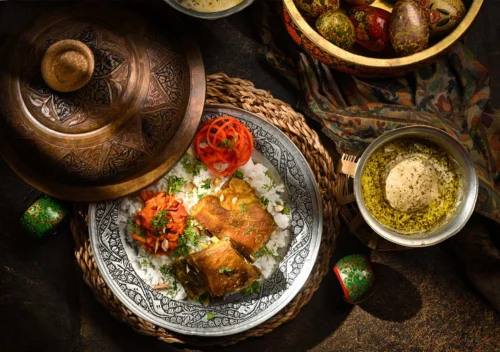
The principles, cultural foundations, and customs that shaped contemporary societies are reflected through the region’s culinary art. Food is also a vital aspect of cultural art that suggests the nature of traditional gastronomy. The Buddhist monks and Kashmiri Pandits shaped the real tastes of the valley. On the other hand, Central Asian and Persian traders have a major effect on Kashmiri cuisine, which influences India’s gastronomy tourism. Traditionally served at weddings, family get-togethers, and other special events like food festivals, Wazwan is a full-course plated meal. Currently, many global restaurants are also serving this iconic Kashmiri platter for travellers and food lovers to enjoy the taste of heritage. This article will dive deep into every single aspect of this traditional culinary art of the Kashmir Valley.
Finding the Origin: From Persian Connection to Traditional Roots
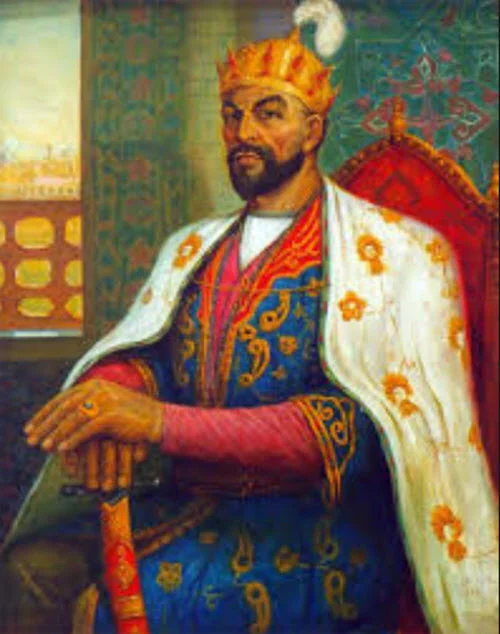
‘Wazwan’ comes from the Persian word ‘Waz’, which refers to master chefs, and ‘Wan’ suggests a shop or business place. Basically, a place where food is being prepared. History shows that the Turco-Mongol ruler Timur, who conquered India in 1398 and imported several talented cooks (approx 100) from Uzbekistan (Samarkand), is acknowledged for creating this culinary expertise. These chefs combined Kashmiri spices with Persian and Central Asian culinary techniques and presented this iconic multi-course platter. This fusion brought the revolution in Kashmir’s culinary tradition and formed a unique food presentation, which was established as the valley’s cultural legacy.
Introducing the Wazas: Chefs of Wazwan
The wazwan dishes are connected to Persian and Sanskrit immigrants, where cooking food is compared to performing art. Some sources suggested the term ‘waza’ comes from the Persian ‘ashpaaz’, meaning special cooks proficient in making soup.
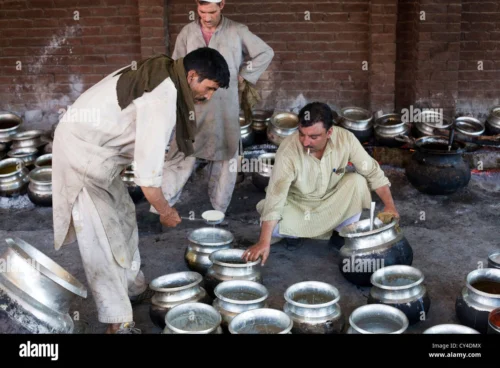
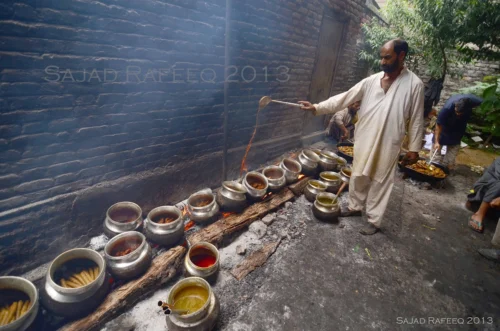
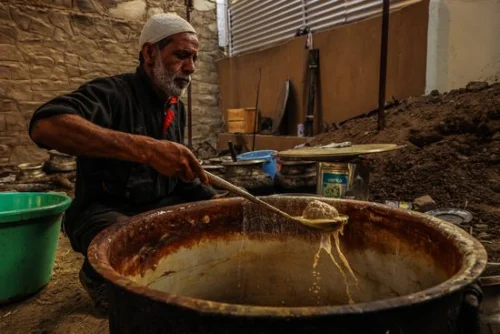
Wazas (Waz) belong to specific clans, where the cooking skill is passed down through generations, and ancient methods are upheld. ‘Wasta Waza’ refers to the master chef, who oversees and guides a team of cooks and maintains the authentic style. Wazas are holding a reputable position in the culinary culture of the valley, preparing wazwan for centuries.
Presenting Etiquette: Serving Rituals
As one of the iconic and historical food preparations of Kashmir, Wazwan has a specific and elaborate dining ritual followed by guests.
The Dastarkhwan: The traditional eating space
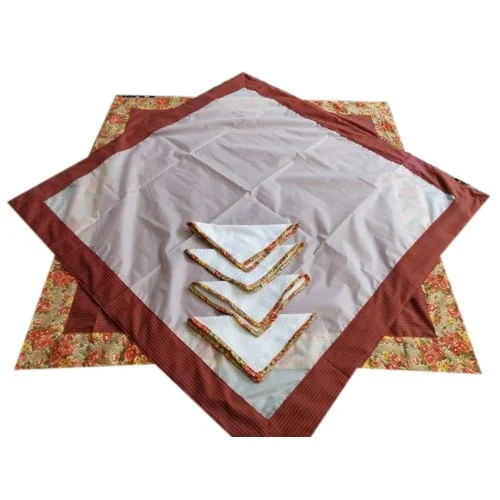
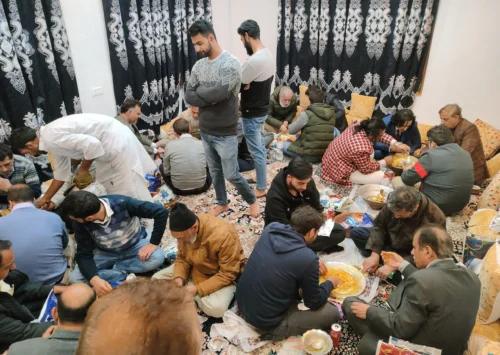
Wazwan is traditionally served upon a ‘dastarkhwan‘, which means ‘eating space’, where clean sheets are spread on the floor’s carpet. During winter, the Bukhari (traditional wood-fire heater) was there to make the dining place warm and egalitarian.
Tasht-Nari: Handwashing process
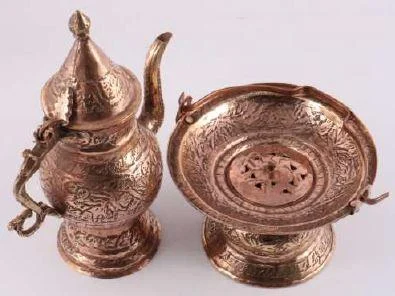
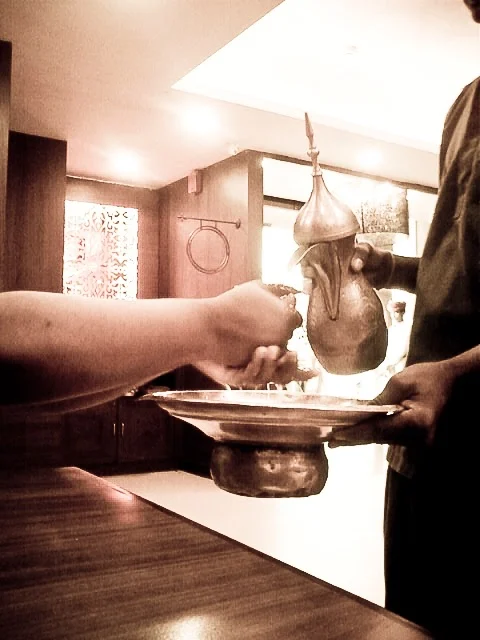
Washing hands is also an essential part of the eating etiquette in this traditional culinary process. Tasht-Nari, a copper vessel set, is carried by younger members (or young wazas) for washing guests’ hands with warm water before the food arrives.
Trami/Traem: The Communal Platter
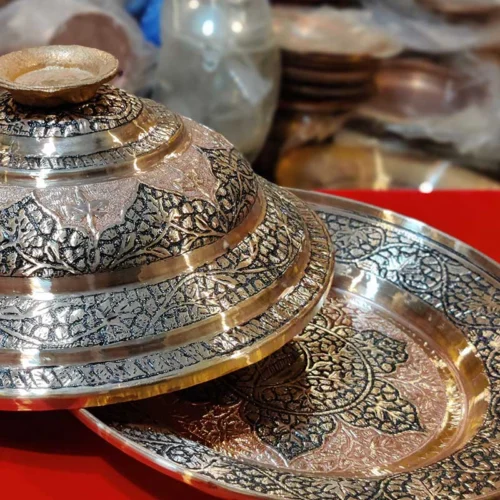
Mostly guests are divided into four-person groups sharing a large single copper platter, known as Trami. Sharing food fosters the idea of togetherness and signifies the Kashmiris’ hospitality.
Presenting the Sarposh: Arrival of main dishes
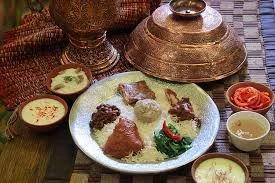
Sarposh or copper lids cover the Trami, where the base meal of wazwan is presented. This lid helps to keep the food warm for a long time. Wazas lift the Sarposh, where aromatic rice and meat dishes are presented. Those dishes are presented on top of rice, creating a visual charm for the guests. Wazas presented food items one by one, where rice was served as required from time to time.
Accompaniments: The Side Dishes
With the savoury dishes, small pots of accompaniments are also presented, where chutney and yoghurt enhance the guests’ appetite.
Arrival of Gushtaba: Signal of Conclusion
Gushtaba, or the yoghurt gravy of large meatballs, is presented at the end of the meal, which identifies the closure. This dish is considered a digestive food for the guests.
Serving Dessert
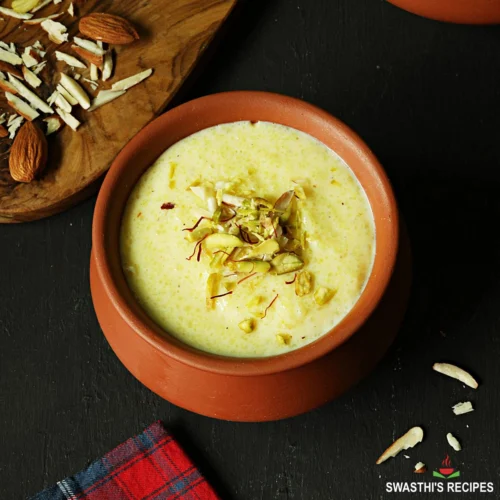
After handwashing, desserts, mostly Phirni (rice pudding) or Kahwa (Kashmiri herbal tea), are presented, which identify a sweet finish to this grand feast.
Stars of Wazwan: List of Included Dishes
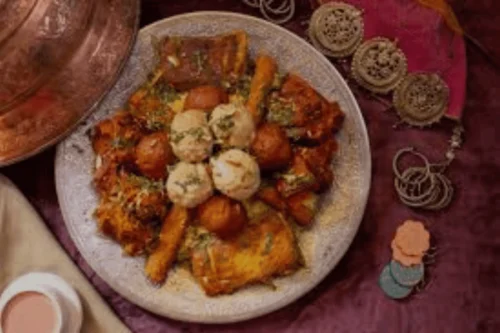
There are primarily 12-36 dishes presented in Wazwan, where core dishes are referred to as ‘Majestic Seven’. Here is a little discussion of the star dishes that comprised this multicourse meal.
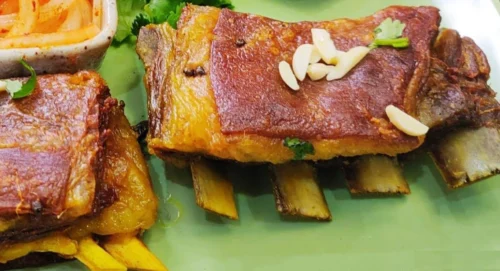
Tabakh Maaz:
In a steady boil, this traditional Kashmiri meal has been prepared twice: once with milk and once with seasonings. Mutton or lamb’s ribs are the main ingredient, where simmering and frying are the two steps of cooking this item as a starter in wazwan.
Koshur Kabab:
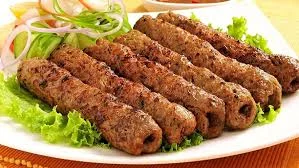
As an integral part of Kashmiri cuisine, the ‘Koshur’ term refers to ‘Kashmiri’ in the local language of the valley. A variety of Koshur kababs are part of the wazwan feast, where Seekh kababs, Lahabi kababs, and Kabab Kanti are the famous ones. This process of making kebab also requires time and efficiency, as the marinated meats are cooked on a skewer.
Riste/Rista:
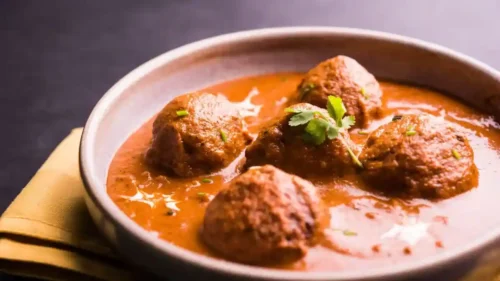
The popular spicy, red-gravy meatball dish, often known as Rista, is one of the major items in Wazwan. Cooking this dish is an extremely labour-intensive process, where wazas need to pound the minced meat on a stone to get a smooth and spongy texture for making the balls.
Aab Gosht:
It is a mild and creamy meat curry, often known as ‘Doodh Maaz’, cooked on slow steam to allow the flavours of the spices to develop.
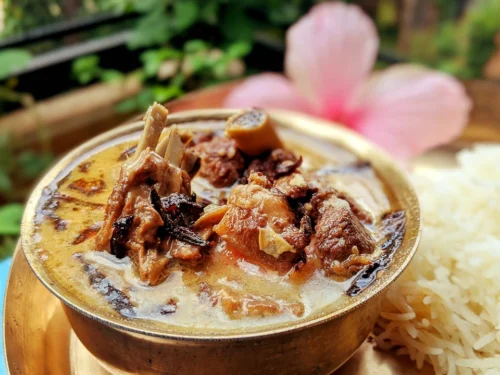
Rogan Josh:
This is a Kashmiri favourite that often appears as a crucial component in the Wazwan platter. Its origin is traced to Persia, where ‘Rogan’ means oil and ‘Josh’ means heat. Traditionally cooked with red meat (lamb/goat), this meal uses Kashmiri spices to provide colour and smell without the use of onions or tomatoes. As before, the secret to achieving this thick and rich sauce is simmering.
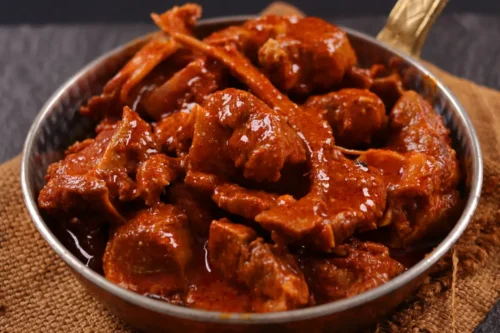
Naate Yakhin (Yakhni):
The term “Yakhni” or “Yakhin” indicates a flavourful liquid broth made with whole spices that serves as the base for many meals, such as Yakhni Pulao. This meal is served as a lamb or mutton curry with a white base in Wazwan.
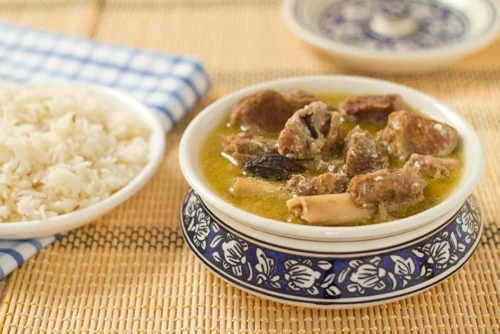
Goshtabe:
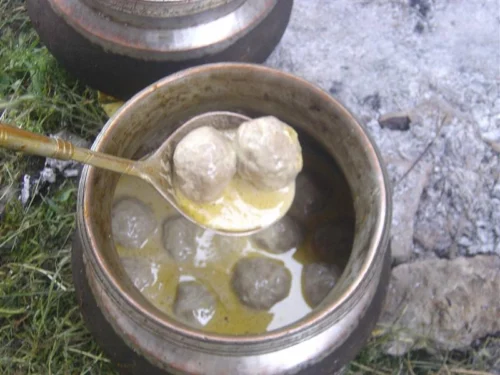
The large, hand-pounded meatball within spicy yellow yoghurt is known as Goshtabe, traditionally signifying the end of serving the meat items. After pounding the meat, wazas make the meatballs and cook them simply. After the gravy is prepared, combining and simmering those balls to soak up the flavour is vital. This ethnic meat preparation signifies the value of food making and build a harmoney between the guests to finish the main meal.
Interesting Facts about Wazwan
Wazwan is the historical culinary art of Kashmir, where freshness is the key. Wazas are dependent on traditional methods to prepare dishes during weddings and other festivals. Hand-pounding meat is used in the two signature dishes of Wazwan (Rista and Gushtaba), which involve a labour-intensive process. The timeline of Wawan preparation is also long, with at least two full days. The team of wazas started by collecting the fresh and high-quality ingredients, then worked through the night to serve the following day consistently. Without the use of artificial colouring, each meal displays the true aromas of Kashmiri spices.
Global Recognition
International gastronomy and cooking shows promote Wazwan as an iconic Kashmiri platter. Every year, this ceremonial culinary skill spreads the essence of Kashmiri tastes and attracts millions of tourists to the valley. Experiencing the wazwan has also become an integral part of Kashmir tourism. As it emphasises the cultural relevance through distinctive gastronomy, this historical Kashmiri cuisine may be included on the UNESCO Intangible Cultural Heritage list soon.
Conclusion: The Paramount of Kashmiri Flavours
The foundation of Kashmiri food is Wazwan, which displays cultural identity, community peace, and the art of hospitality. Wazwan demonstrates the ceremonial performance and the traditional festivals’ ritualistic significance. From its roots in Persia, Wazwan is now significantly recognised as a part of the valley’s culture. This multi-course feast is a living tradition that synthesises with Kashmiri artistry and community value.
References
- https://www.kashmirica.com/blog/kashmiri-wazwan/#:~:text=Although%20Kashmiri%20Wazwan%20comprises%20of,Goshtabe
- https://kashmirnewsline.net/eating-together-binds-families/
- Rehman, M.S. and Rathore, P.S., Consumers perception towards Kashmiri cuisine: Wazwan. Available at: https://www.multireviewjournal.com/assets/archives/2020/vol5issue2/5-2-22-615.pdf
- Times of India, 2021. Available at: https://timesofindia.indiatimes.com/life-style/food-news/the-classic-tale-of-royal-kashmiri-wazwan/articleshow/87685773.cms